
Is your tree at risk of splitting?
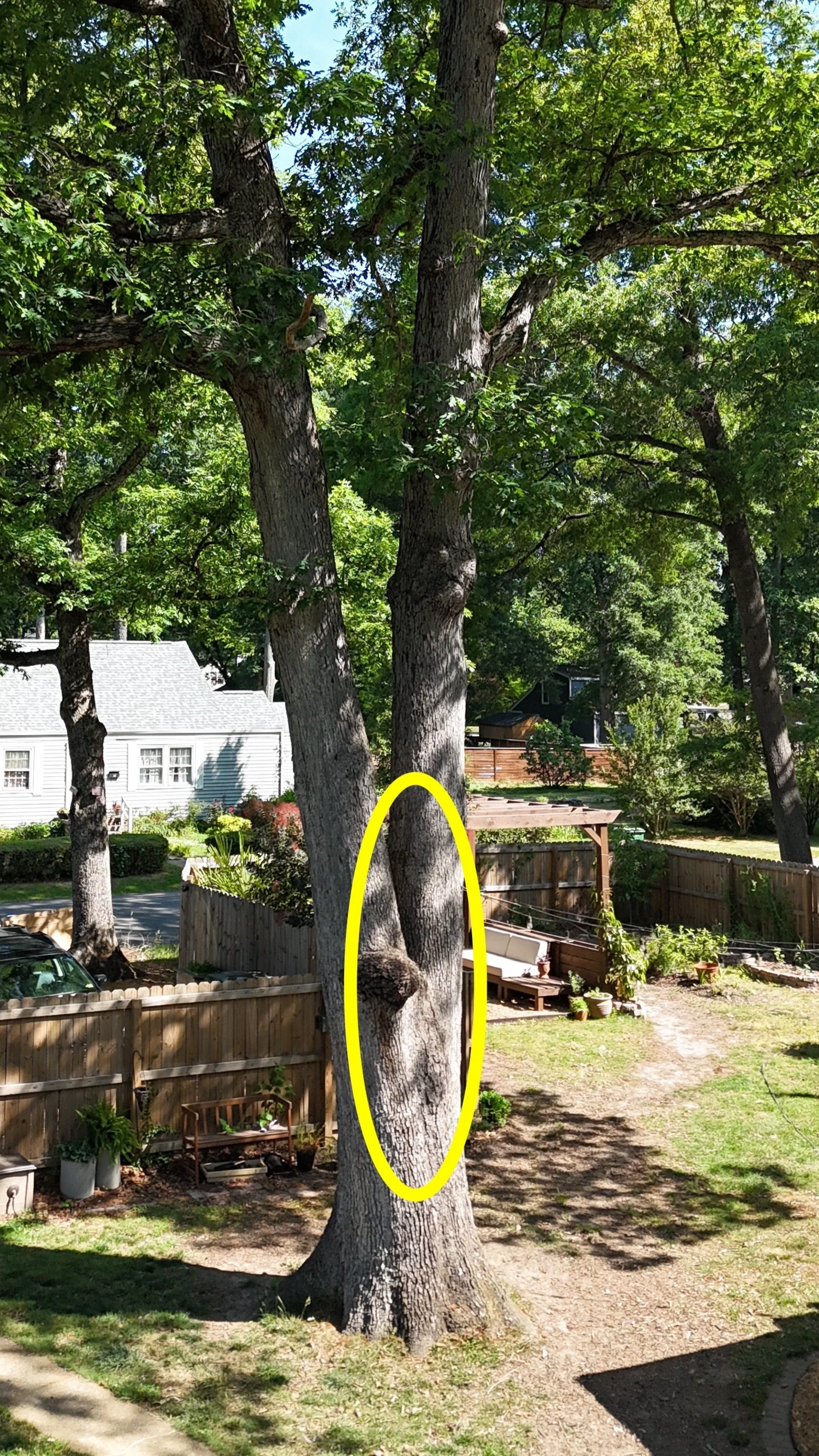
Many trees develop two large stems that grow side by side from the same point on the trunk. Arborists refer to these as codominant stems.
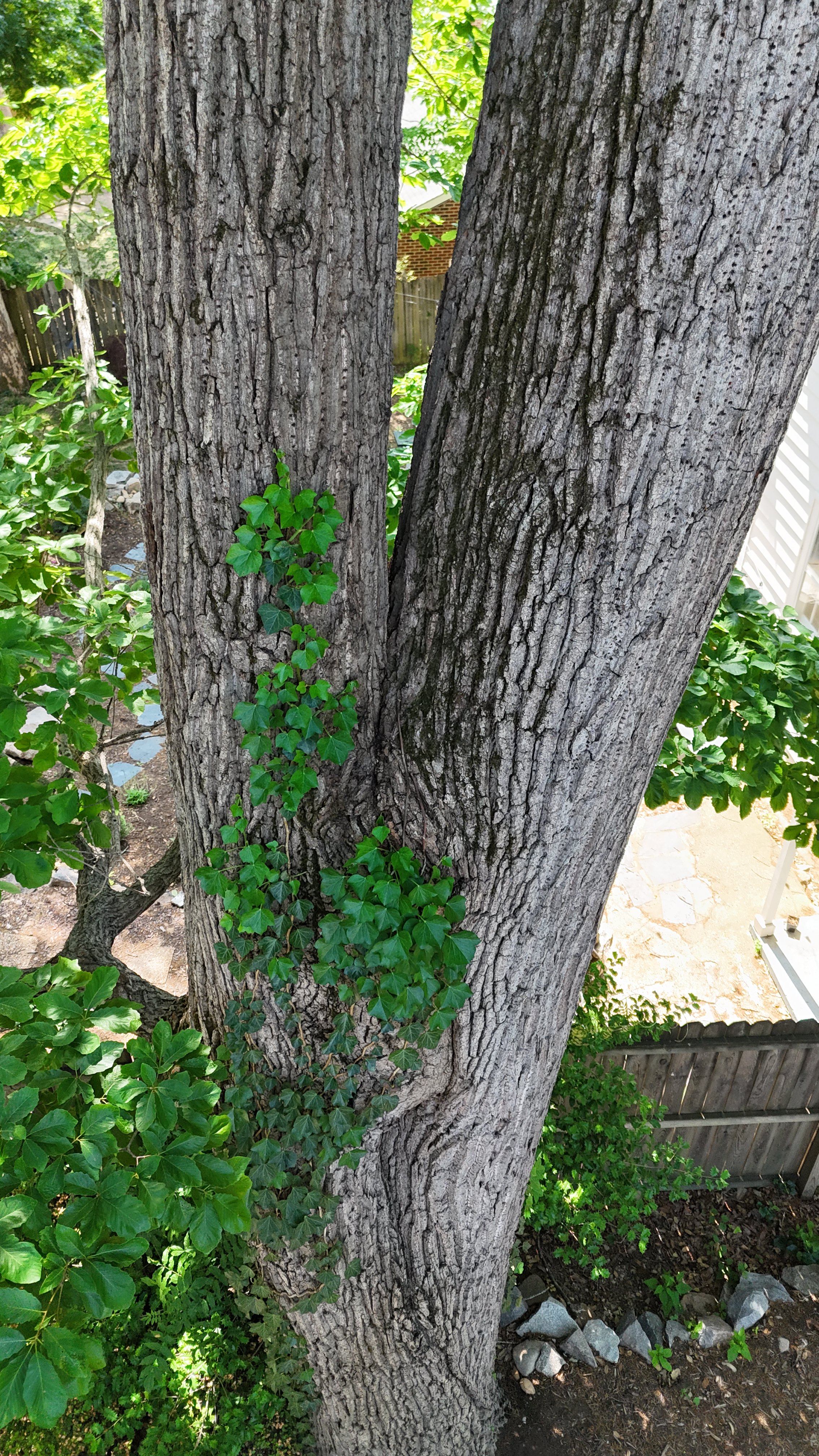
One common warning sign is a narrow V-shaped union where the stems meet. These unions often contain included bark, which prevents a strong attachment from forming and increases the likelihood of cracking or separation over time.
Common warning signs include:
Two large stems of similar size originating from the same point
A narrow V-shaped union rather than a broad U-shaped attachment
Visible cracks, seams, or openings where stems meet
Not every codominant stem requires support. Identifying structural weaknesses early can preserve more options for the future.
What Is Tree Cabling?
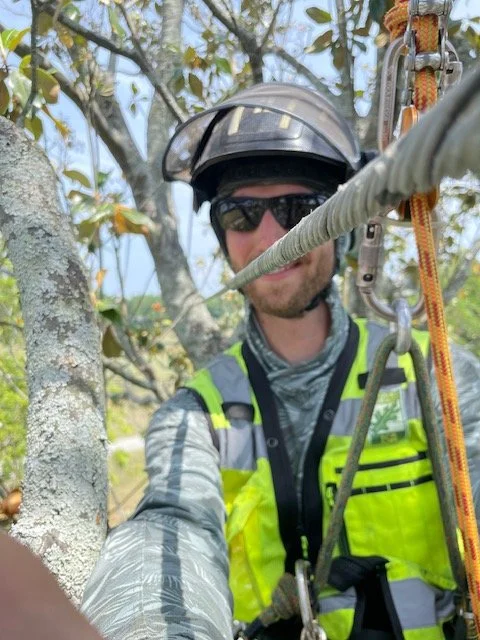
Cabling is a structural support system designed to reduce stress on weak branch unions and codominant stems. By installing a support cable high in the canopy, loads can be transferred from a weak union to a high-strength steel cable.
The goal of cabling is to reduce the likelihood of structural failure while preserving a mature tree whenever appropriate.
Cabling is often combined with structural pruning to reduce leverage and slow the growth of certain stems. Together, these treatments can improve long-term resilience while preserving the tree’s natural form.
When Is Cabling Appropriate?
Cabling may be appropriate when a tree has a structural weakness and either preserving the tree is a high priority or the consequences of failure would be significant.
Common situations include:
Large stems extending over homes, patios, driveways, or other high-use areas
Mature trees with significant landscape, historic, or sentimental value
Trees where the loss of a major stem could compromise the entire tree
Structurally weak trees where preservation is preferred over removal
Not every structural weakness requires a cable. The decision depends on the tree’s structure, condition, value, and the potential consequences of failure.
What Happens If the Tree Isn’t Supported?
Structural weaknesses can worsen as a tree grows. As stems become larger and heavier, stress on a weak union can increase over time.
Repeated movement can contribute to cracking within a weak union. Once cracks develop, they can allow moisture and decay organisms into exposed wood, further weakening the attachment over time.
In some cases, this can lead to:
Progressive crack development
Decay within the union
Separation of codominant stems
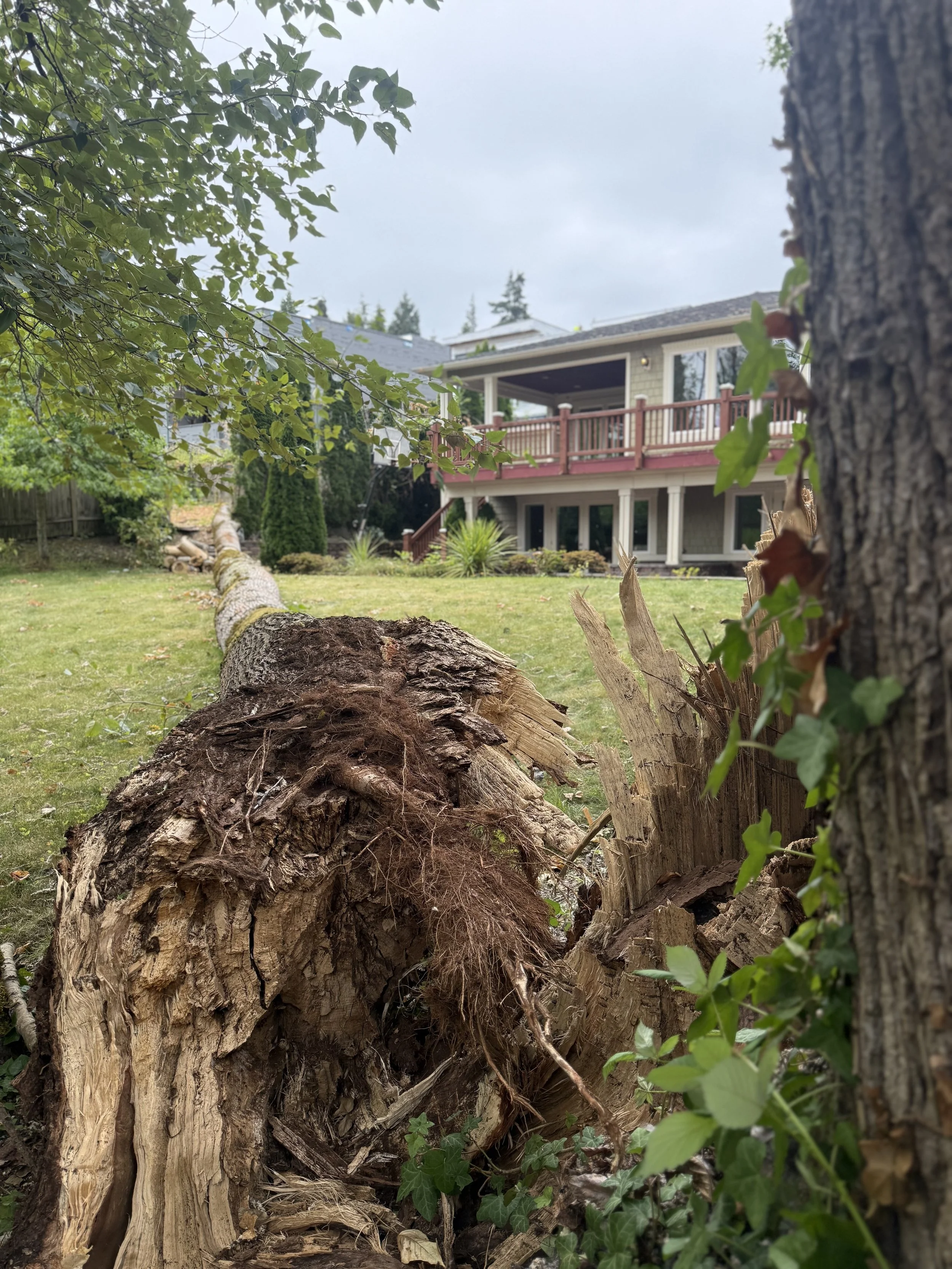
Failure of a major stem
Damage to nearby homes, vehicles, or other property
Loss of a tree that might otherwise have been preserved
Addressing structural weaknesses early can reduce stress on the union, limit further destabilization, and preserve more of the tree’s existing structural integrity.
How Is The Cable Installed?
A support cable is typically installed high in the canopy, approximately two-thirds of the distance from the weak union to the tops of the supported stems. This placement gives the cable greater leverage over the weak union.
High-strength steel cable is connected to through-bolted hardware installed directly through the supported stems. The system is designed around the tree’s structure, size, and specific points of weakness.
After installation, support systems should be inspected periodically as the tree continues to grow and change.
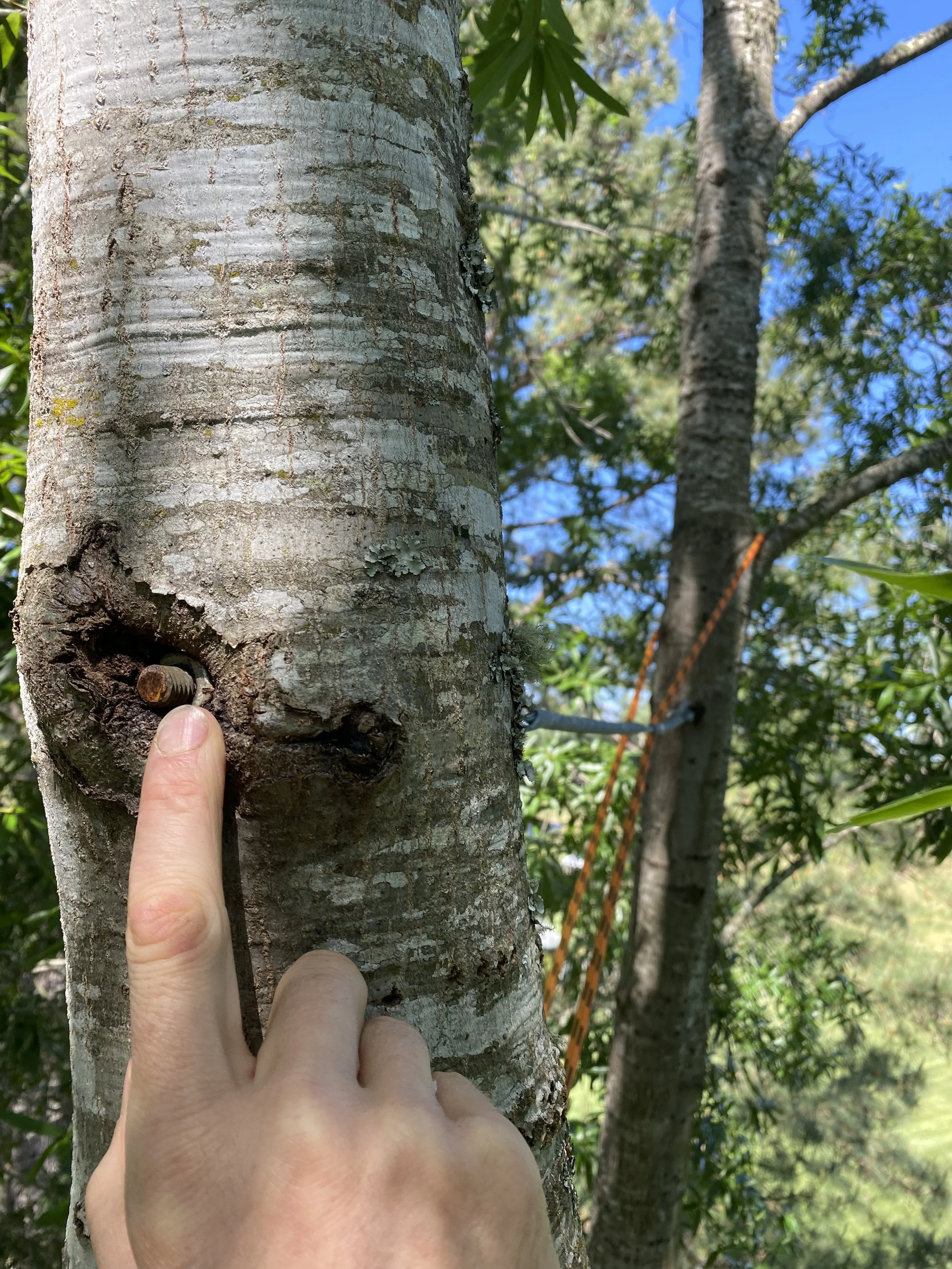
Willow oak beginning to grow over the cable hardware two years after installation.
Frequently Asked Questions
Will the cable hurt the tree?
No. When properly installed, through-bolted hardware causes a small, localized wound that the tree grows around over time. This approach avoids wrapping hardware around the stem, which can restrict growth and eventually girdle the tree.
How long do cables last?
Steel support systems can remain in service for many years. Because trees continue to grow and change, cables should be inspected periodically to confirm that the system remains appropriate and in good condition.
Can the tree still move?
Yes. The tree can continue to move while the cable limits movement at structurally weak points.
How much does cabling cost?
Most residential tree cabling projects start around $850. Final cost depends on tree size, access, the number of cables required, and whether structural pruning is included.
Do I need pruning too?
Not always. When appropriate, structural pruning can be combined with cabling to reduce leverage and slow the growth of selected stems. Whether pruning is recommended depends on the tree’s age, vigor, and structure.
Is removal a better option?
Sometimes. Cabling is most appropriate when preserving the tree is a reasonable long-term goal. Trees with extensive decay, severe structural deterioration, or other significant defects may not be good candidates for support.